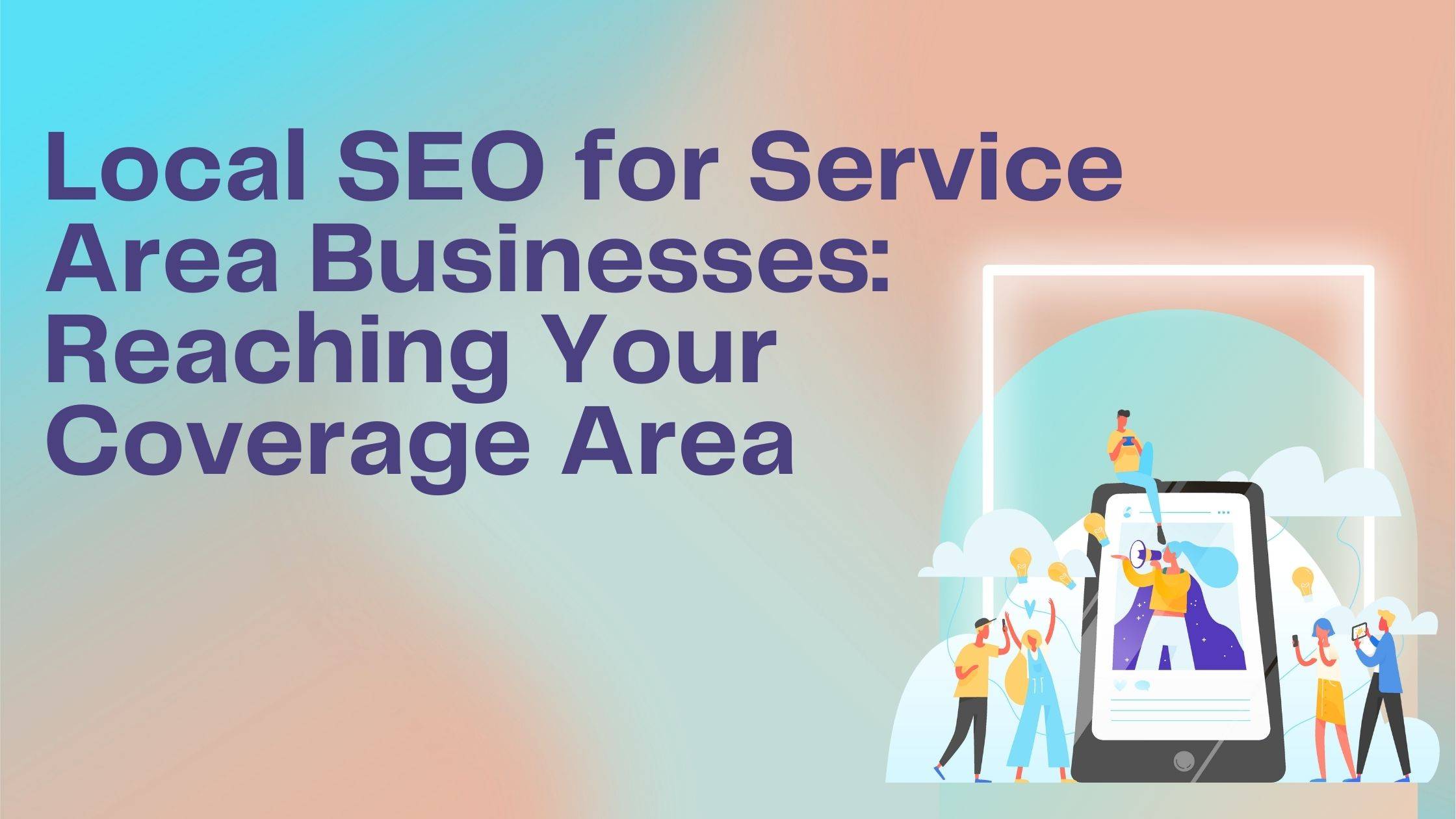
Looking to connect with more customers as a service area business? This guide shares the best practices to improve your online visibility and attract more local traffic.
For small, mobile businesses that don’t operate from a permanent storefront, navigating local SEO can feel overwhelming.
Service area businesses (SABs) – such as electricians, plumbers, mobile pet groomers, and similar providers – face distinct challenges when it comes to building a strong online presence.
By understanding how local SEO works for service area businesses and applying the right methods, you can target your service zones effectively and reach more customers than ever before.
This detailed guide explores the essentials of local SEO for SABs, offering strategies, insights, and proven practices to help you focus on your coverage areas, increase visibility, and generate more local business.
What Are Service Area Businesses?
Service area businesses are those that deliver their services at the customer’s location. Unlike traditional physical stores, SABs don’t depend on foot traffic or walk-in customers. Their defined service boundaries determine their main markets.
Typical examples of SABs include:
- Plumbers
- Electricians
- HVAC technicians
- Roofers
- Mobile pet groomers
- House cleaning providers
- Mobile paramedical services
- Landscapers
Challenges and Opportunities in Local SEO for SABs
Service area businesses encounter distinct hurdles in local SEO because they lack a physical storefront to showcase or build authority around.
Like all local businesses, SABs need to prove their relevance, trustworthiness, and expertise as outlined in Google’s Search Quality Rater Guidelines. Without a fixed business address, this task can feel even more challenging.
At the same time, not being tied to a single location also creates opportunities to extend reach across multiple service areas.
Key Challenges
- No physical storefront for foot traffic: Unlike traditional businesses, SABs can’t depend on Google Maps pins tied to a specific address to naturally appear in “near me” searches. Still, optimizing your Google Business Profile is possible—and strongly recommended.
- Competing with businesses that have storefronts: SABs must often go head-to-head with both established brick-and-mortar competitors and other service-based companies in the same market.
- Defining and proving service area authority: To target the right customers, SABs must clearly outline their service boundaries. The challenge lies in showing Google they can reliably serve customers across potentially broad regions—sometimes overlapping with competing service areas.
Opportunities for SABs in Local SEO
While challenges exist, service area businesses also enjoy several advantages when it comes to local SEO.
- Wider market coverage: Unlike storefront businesses limited to a single location, SABs can naturally expand their reach across multiple geographic areas.
- Adaptability: Service areas can be adjusted as demand grows or as business goals evolve, giving SABs greater flexibility in targeting customers.
- Lower overhead: Without the expenses tied to maintaining a physical shop, SABs often operate more cost-effectively, allowing them to focus more resources on growth and marketing.
Read More: Local SEO for Non-Physical Businesses: Overcoming the Challenges
Key Strategies for Local SEO Success
To tackle these challenges and fully leverage the opportunities, SABs need strong local SEO strategies. Success comes from ensuring your content and presence are visible where customers are actively searching.
According to a 2023 BrightLocal survey, the most trusted sources consumers use to find local businesses are:
- Google (66%)
- Google Maps (45%)
- Business websites (36%)
- Facebook (32%)
- Yelp (32%)
Let’s look at how SABs can optimize for these channels, starting with the most important: Google Business Profile.
1. Optimize Your Google Business Profile (GBP)
For many service businesses, a Google Business Profile is just as important—sometimes even more important—than their main website. A Think with Google study revealed that 60% of smartphone users contact a business directly from search results (e.g., using the “click to call” option), and this trend continues to rise.
Even without a storefront, SABs can maximize visibility through GBP by following these steps:
Create a GBP Profile
Set up your GBP account and choose the “service-area business” option. Enter your address but keep it hidden, then define up to 20 service areas based on city or postal codes.
👉 Google’s guideline: “The boundaries of your overall area should not extend farther than about 2 hours of driving time from where your business is based.”
If your coverage extends beyond this, consider creating an additional GBP with a base closer to that area.
Choose Accurate Categories
Select primary and secondary categories that best match your services. Avoid picking categories for services you don’t actually provide, as this can dilute your authority and mislead customers.
Complete Every Section
Fill out every field in your profile:
- Business name, phone, website
- Service areas and working hours
- Payment methods, accessibility options, and amenities
- Social media links
- Supported languages
- Photos (logo, team, vehicles, service work, etc.)
The more complete your profile, the more trustworthy and appealing it appears to potential customers. In some cases, highlighting service to specific demographics or communities can even open up new opportunities.
Encourage and Respond Quickly to Customer Reviews
Reviews on Google Business Profile play a major role in local search rankings.
Both positive reviews and timely responses to negative ones can improve visibility while building credibility with potential customers.
For service area businesses, it’s especially valuable to collect reviews from clients across all defined service zones. If you list 10 different areas within a two-hour driving distance, aim to secure customer feedback from each of those regions. This reinforces your “local presence” to Google.
Pro tip: Ask happy customers to include details about the specific service and location in their review. For instance: “We’re grateful ABC Roofing Company repaired our roof in [location] quickly and within budget!”
Post Fresh Content Regularly
Your Google Business Profile isn’t just a listing—it’s also a publishing platform. You can share updates about your services, promotions, events, blog posts, and more.
Many businesses overlook this feature, but it’s an excellent way to showcase expertise, highlight engagement with customers, and reinforce relevance in local searches.
If you’re already creating blog posts, social updates, or newsletters, repurpose that content for GBP posts to maximize visibility.
2. Build a Strong, Mobile-Friendly Website with Local SEO in Mind
Although GBP captures a lot of local search traffic, your website still serves as your main online hub and storefront. For service area businesses, optimizing your website for local SEO is essential.
Create Location-Specific Pages
If you cover multiple areas, build dedicated landing pages for each one. Include unique content, contact information, and locally targeted keywords on every page.
For example, if you have technicians assigned to different service areas, highlight that information. Embedding a Google Map on each location page can also reinforce relevance.
⚠️ Avoid copying the same content across all pages. Add distinctive details to ensure each page is unique and valuable.
Optimize Website Pages for Local Searches
Use local keywords throughout your site—page titles, headings, meta descriptions, body content, and image alt tags. This helps search engines connect your business with queries in your service areas.
Ensure a Mobile-Friendly Experience
In today’s digital landscape, a responsive, mobile-optimized website is non-negotiable.
According to Statista, more than 58% of global web traffic in 2023 came from mobile devices. If your site isn’t optimized for mobile, you risk losing out on the majority of potential visitors.
Build Local Citations
To strengthen your “local presence,” it’s essential to get your business listed in reputable online directories and platforms, while keeping your NAP (name, address, phone number) details consistent across all listings.
For service area businesses, this means securing citations in directories that cover each of your service regions. The more your business appears locally, the more signals you send to Google that you genuinely operate in those areas.
Pro tip: Before investing in paid directory listings, run Google searches for your target keywords and check if those directories rank. If they don’t, the value may be limited. Another smart approach is to ask the directory for traffic and referral data from similar businesses they’ve supported.
3. Local Link Building
Earning quality backlinks from locally relevant sources can greatly boost both your authority and search visibility. Here are some effective tactics:
- Collaborate with nearby businesses: Partner with complementary service providers in your target areas and exchange links where appropriate.
- Get involved in your community: Sponsor local events, participate in neighborhood forums, or support local organizations. These activities often result in backlinks and signal strong local credibility.
- Add local links on your own site: A “Local Events” or “Community News” section with outbound links to local happenings can also reinforce your presence to Google.
4. Use Service-Area-Focused Content Marketing and Social Media
Modern SEO is more than technical optimization—it’s about creating useful, relevant content that answers customer questions and builds trust. For SABs, tailoring content to your service areas can set you apart.
Ideas for local content marketing include:
- Writing blog posts or guides on community-specific issues, events, or tips related to your services.
- Showcasing customer success stories or case studies from different service areas.
- Linking this content to your location-specific website pages to strengthen local authority.
Promoting your content is just as important as creating it. Share posts on your Google Business Profile, social media channels, local community forums (like Nextdoor or Facebook Groups), and email newsletters.
Examples of engaging local content could be:
- Before-and-after project photos from different neighborhoods.
- Video testimonials from customers in varied locations.
- Behind-the-scenes posts showing your team at work in local communities.
5. Monitor and Measure Your Local SEO Performance
Keeping track of your local SEO efforts is just as important as implementing them. Regular monitoring helps you see which strategies are driving results, where adjustments are needed, and how effective your overall approach really is.
For service area businesses, here are the five main areas to focus on:
- Review Google Business Profile Insights
Check your GBP data often—views, searches, clicks, calls, and messages. These insights show how people are finding and engaging with your listing. - Leverage Google Analytics
Track website traffic sources, landing page performance, user behavior, and conversions. This data reveals how visitors interact with your site, helping you fine-tune both SEO and content strategies. - Watch Local Rankings
Use rank-tracking tools to monitor your visibility in the local Map Pack and organic search results for important keywords. - Track Social Media Engagement
Every social platform provides analytics. Pay attention to your post reach, engagement levels, and your most active followers. Building relationships with these engaged users can extend your local influence.
Targeting Your Local Presence
For service area businesses, local SEO is the key to connecting with customers in the right regions. By applying the strategies we’ve covered, you can target your service areas more effectively, bring in consistent leads, and grow your business.
The essentials to keep in mind include:
- Fully optimizing and maintaining your Google Business Profile.
- Collecting reviews from customers across all service zones.
- Building relevant backlinks from directories, partners, and local sites.
- Keeping your website mobile-friendly, accurate, and locally optimized.
- Consistently creating and promoting content that addresses customer questions.
- Monitoring your performance and adapting your strategies as needed.
⚠️ One final note: avoid overstretching your coverage. Google is less likely to see you as a truly “local” provider if your service areas extend beyond a two-hour driving radius.
Frequently Asked Questions (FAQs)
1. What is a Service Area Business (SAB)?
A Service Area Business (SAB) is a business that provides services at a customer’s location rather than operating from a physical storefront. Examples include plumbers, electricians, landscapers, and mobile pet groomers.
2. Can service area businesses use Google Business Profile without a storefront?
Yes. SABs can create a Google Business Profile by selecting the “service area business” option. You can hide your physical address and define your service areas by city or postal code.
3. How can SABs compete with businesses that have physical locations?
SABs can focus on building strong online visibility through local SEO strategies such as optimizing their GBP, creating location-specific landing pages, earning reviews from different service areas, and developing localized content.
4. Why are customer reviews important for service area businesses?
Reviews not only build trust with potential customers but also act as a ranking factor for local SEO. Reviews from different service areas prove to Google that your business is active and credible across multiple regions.
5. What are the best ways for SABs to show “localness” to Google?
To prove local relevance, SABs should:
- Maintain consistent NAP details across directories.
- Obtain citations in local listings.
- Collect reviews from multiple service areas.
- Build backlinks from local businesses and organizations.
6. How many service areas should I list on my Google Business Profile?
Google allows up to 20 service areas. However, it’s best to focus on realistic coverage within a two-hour driving distance of your base location.
7. Do SABs need separate web pages for each service area?
Yes, creating unique location-specific pages helps improve visibility in search results for each area. Be sure to include tailored content and avoid duplicating the same text across pages.
8. How can SABs use social media for local SEO?
Social media can amplify local content, showcase projects, highlight customer stories, and share updates in community groups. Engaging locally on platforms like Facebook or Nextdoor also boosts visibility and trust.
9. What tools help track SAB local SEO performance?
Key tools include Google Business Profile Insights, Google Analytics, rank trackers for local keywords, and social media analytics dashboards. These help measure performance and identify opportunities for improvement.