What is GEO and AEO?
The way SEO works is changing quickly for publishers, bloggers, and writers. In the past, the main goal was to rank at the top of Google search results and get traffic through the blue links. But now, with the rise of AI tools and answer engines, success also depends on whether your content appears in AI-generated answers. This shift has introduced new terms like Generative Engine Optimization (GEO), Answer Engine Optimization (AEO), and Generative Search Optimization (GSO). Since this area is still new, there is no fixed terminology, and many marketers use these terms to describe the same concept—optimizing content so that AI systems and answer engines can easily understand it and include it in their responses.
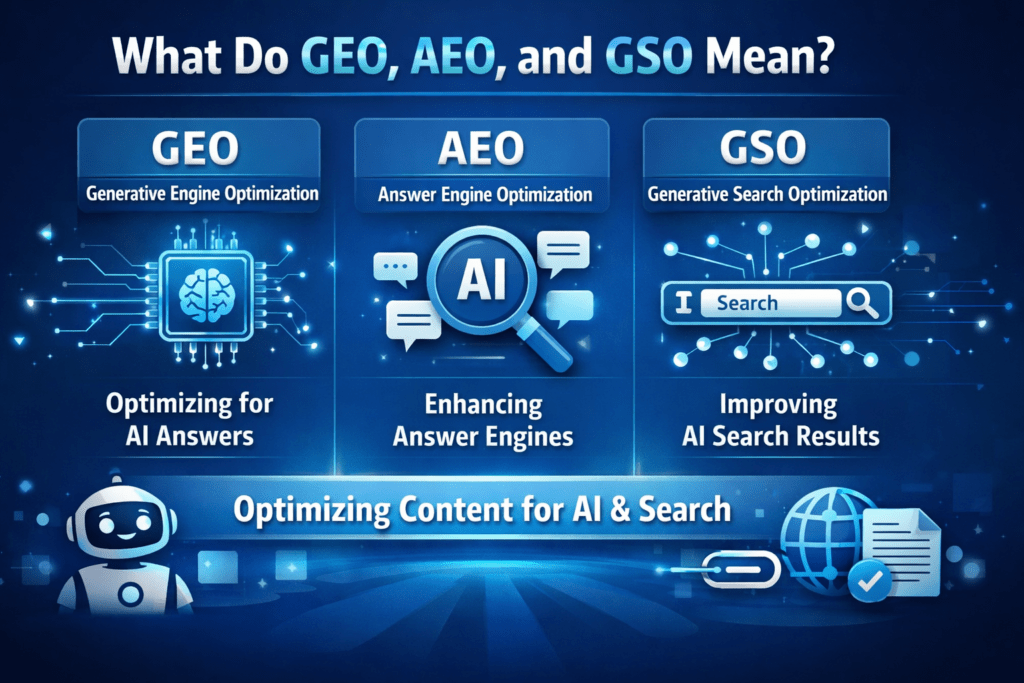
What Do GEO, AEO, and GSO Mean?
In simple terms, GEO, AEO, and GSO all focus on one main idea — helping AI systems understand your brand and content so they can include it in the answers they generate. Whether you are a publisher, marketer, or e-commerce business, the goal is to make your website and content clear enough for AI crawlers to find, understand, and use in their AI-powered responses. If AI platforms recognize your content as useful and trustworthy, they are more likely to show it in the answers they provide to users.
AI is already transforming how search works. It’s not only changing the appearance of search results but also the way people ask questions and look for information online. Because of this shift, businesses now need to think beyond traditional SEO and start preparing their content for AI-driven search experiences.
Will GEO or AEO Replace SEO?
No, GEO or AEO will not replace SEO. Traditional search is still widely used and deeply established. Instead of replacing SEO, these new approaches are developing alongside it. Many SEO experts now see them as an important part of future digital strategies. Although this area is still new and there is no fixed framework or clear playbook yet, experts believe businesses cannot afford to ignore it.
How Is It Different from SEO?
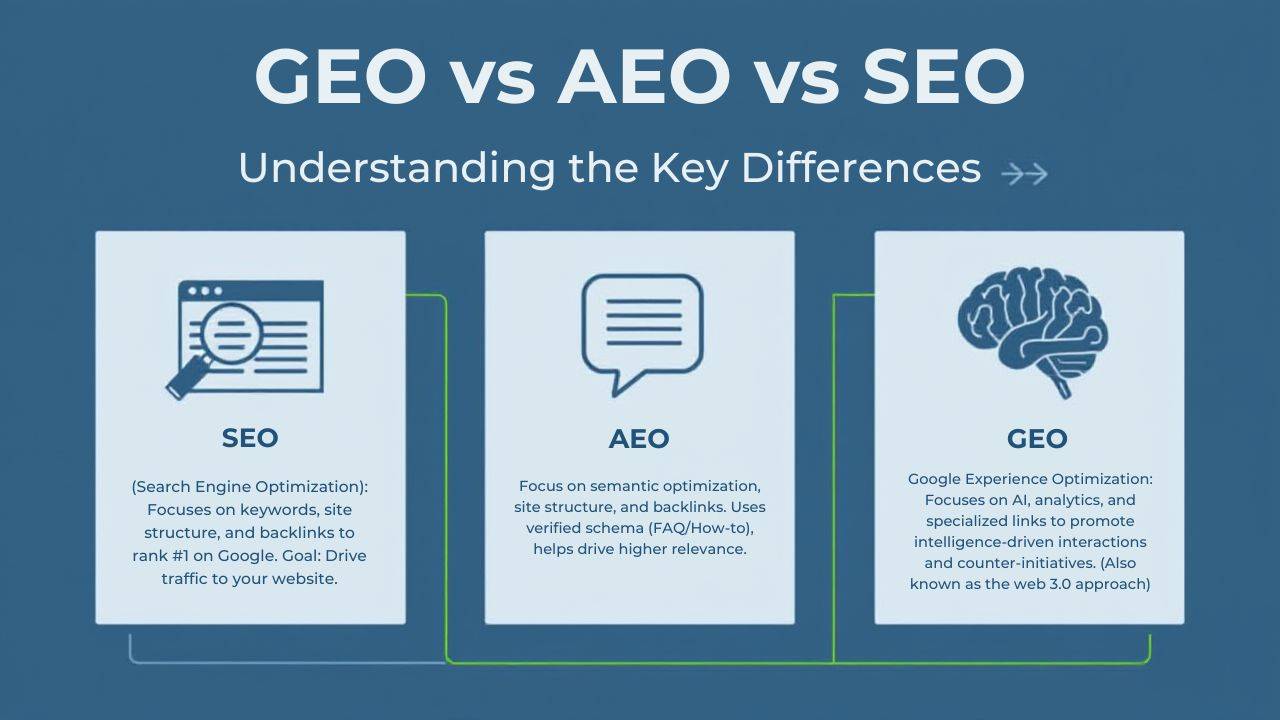
Traditional SEO focuses on improving your website’s ranking in search engine results so users can find it when searching for specific keywords. Success is often measured through metrics like rankings and click-through rates. On the other hand, GEO, AEO, or GSO focus on helping AI systems understand your content well enough to use it when answering more complex user questions. Instead of only ranking on a search page, the goal is to ensure AI engines can reference, cite, or link back to your content when generating responses. This means businesses must also pay attention to how their brand and information appear within AI-generated answers.
What Do AI Crawlers Look For?
Compared to traditional search engine crawlers, AI crawlers used by large language models are still developing and not as advanced. Because this technology is relatively new, AI systems sometimes face difficulties accessing or fully understanding content on certain websites. For this reason, many experts suggest that brands may need to simplify their website structure and content so AI engines can read and process it more easily. One emerging approach is using LLMS.txt, which allows website owners to provide structured website data directly for large language models—similar to how robots.txt guides traditional search engine crawlers.
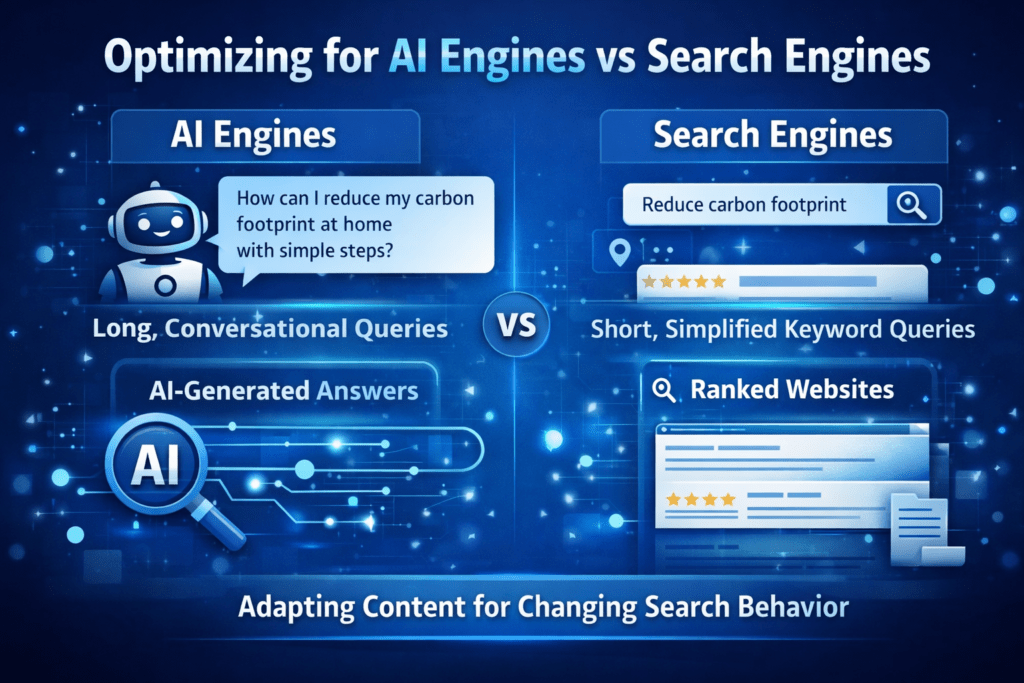
Optimizing for AI Engines vs Search Engines
Optimizing content for AI engines is different from traditional SEO because user behavior is changing. In search engines, people usually type short keyword-based queries. However, when using AI tools, users often ask longer and more detailed questions. These are commonly called long-tail queries, where users write complete prompts and expect clear, summarized answers instead of a list of links.
Another challenge is the lack of data and analytics available for AI-driven search results. Unlike traditional SEO tools that provide reports on rankings, traffic, and click-through rates, there are currently very limited insights into how content performs within AI-generated answers. Because of this, many marketers and publishers are still experimenting to understand how to best optimize their content for AI-powered search platforms.
Are There Any Workarounds?
Yes, there are a few practical approaches, although they may not always be completely accurate. One simple method is to explore discussion platforms like Reddit to see what people are talking about and what questions they are asking around a specific topic. Looking at real conversations can help content creators understand the type of problems, doubts, or interests people have. Platforms such as TikTok can also provide insights into trending questions and discussions. By studying these conversations, writers and marketers can create content that directly answers the questions people are asking, which may improve the chances of their content appearing in AI-generated responses.
Should Publishers Even Optimize for AI Engines?
This is a more complicated question. AI-powered answer engines can sometimes reduce the number of clicks that websites receive because users get answers directly without visiting the source website. For publishers, this creates a challenge because less traffic can affect advertising revenue and audience growth. However, for other types of businesses such as e-commerce websites, appearing in AI answers can still be valuable because it increases brand visibility and trust. Even if the number of clicks decreases, the people who do click may be more interested and more likely to take action.
Could This Reduce Website Traffic Further?
There is a growing concern that AI-generated answers may lead to fewer clicks for publishers and content creators. In some cases, AI systems generate full answers without sending much traffic back to the original websites. For example, content like recipes, guides, or quick how-to information can sometimes be summarized directly by AI tools. Because of this, some publishers are still deciding whether it is worth optimizing specifically for AI platforms.
Even with these challenges, the trend toward AI-driven search is continuing to grow. For content creators and businesses, the key focus remains the same: protecting their audience, building brand visibility, and finding new ways to connect with readers as search technology continues to evolve.
FAQs on GEO, AEO, and AI Search Optimization
1. What is Generative Engine Optimization (GEO)?
Generative Engine Optimization (GEO) refers to optimizing content so that AI-powered search engines and answer engines can understand and use it when generating responses for users.
2. What is the difference between GEO and AEO?
Both GEO (Generative Engine Optimization) and AEO (Answer Engine Optimization) focus on helping AI systems find and use your content in generated answers. The main idea behind both is to improve visibility in AI-generated responses rather than just traditional search results.
3. Will GEO replace traditional SEO?
No, GEO will not replace SEO. Traditional SEO is still important for ranking in search engines, while GEO works alongside it to help content appear in AI-generated answers and summaries.
4. How do AI search engines differ from traditional search engines?
Traditional search engines show a list of links based on keywords, while AI search engines provide summarized answers generated from multiple sources.
5. What are long-tail queries in AI search?
Long-tail queries are detailed and conversational questions that users type into AI tools instead of short keyword searches. These queries usually expect a complete answer rather than a list of websites.
6. How can you optimize content for AI engines?
You can optimize content by writing clear explanations, answering common questions, using structured headings, and creating informative content that directly addresses user intent.
7. Why is AI search creating challenges for publishers?
AI tools sometimes provide direct answers without requiring users to click on websites. This can reduce website traffic for publishers and content creators.
8. Is optimizing for AI search still important for businesses?
Yes. Even if click-through rates decrease, appearing in AI-generated answers can improve brand visibility, credibility, and trust among users.